Editor's note: This page was originally published in 2014 and has been updated in April 2026.
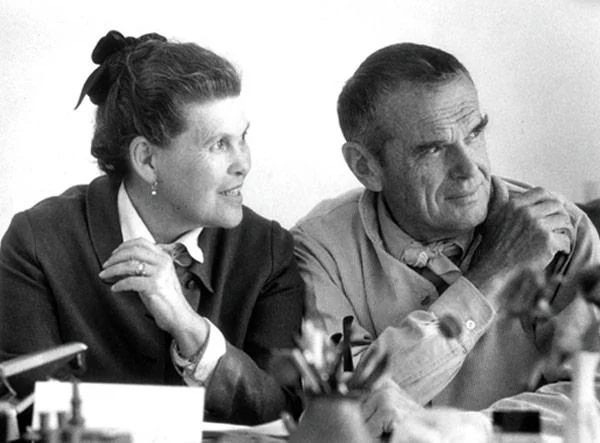
Charles and Ray Eames
Design is for living. That maxim shaped a widespread shift in design during the 1940s and 1950s. It was a revolution of form, an exciting visual language that signaled a new age and a fresh start. Two of its prime movers were Charles and Ray Eames, a husband and wife team whose unique creative synergy led to a whole new look in furniture. Lean and modern. Sleek, sophisticated and simple. Beautifully functional.
Yet Charles and Ray Eames created more than a look with their bent plywood chairs or molded fiberglass seating. They had ideas about making a better world, one in which things were designed to fulfill the practical needs of ordinary people and bring greater simplicity and pleasure to everyday life. As Charles noted about the molded plywood chair: "Yes, it was a flash of inspiration. A kind of 30-year flash."
A Life in Design
Charles Eames was born in St. Louis, Missouri in 1907. He studied architecture before being expelled for his progressive views on the organic architecture of Frank Lloyd Wright. He eventually landed at the Cranbrook Academy of Art in Michigan, where he met his future wife and creative partner, Bernice Alexandra Kaiser, who went by Ray.
Ray Kaiser was a painter and artist with a background in abstract expressionism, having studied under Hans Hofmann in New York. Her visual sensibility was fundamental to everything the pair would go on to create together. They married in 1941 and immediately began working as a team.
Their early breakthrough came during World War II, when the U.S. Navy commissioned them to develop molded plywood leg splints for injured soldiers. The technology they refined during that process, bending and molding plywood into complex organic shapes, became the foundation of their entire design legacy.
Beyond Furniture
The Eameses were restlessly curious. While the furniture is what they are most remembered for, it represents only a fraction of what they made.
They designed and built their own home in Pacific Palisades, California in 1949 as part of the Case Study House program, a celebrated experiment in modern residential architecture. The Eames House, as it is known, still stands today and is managed by the Eames Foundation as a historic landmark.
They made over 125 films, ranging from short educational pieces to the landmark Powers of Ten (1977), which visualized the relative scale of the universe from the subatomic to the cosmic. It remains one of the most influential science films ever made.
At the 1959 American National Exhibition in Moscow, they created a seven-screen film installation inside a geodesic dome designed by Buckminster Fuller, watched by thousands of Soviet citizens including Nikita Khrushchev. The installation was a landmark moment in the use of design as diplomacy.
They also designed exhibitions, toys, textiles, and the interiors of corporate offices. Herman Miller CEO D.J. De Pree, who became a close friend and collaborator, described Charles Eames as the most important influence on Herman Miller's identity as a design-forward company.
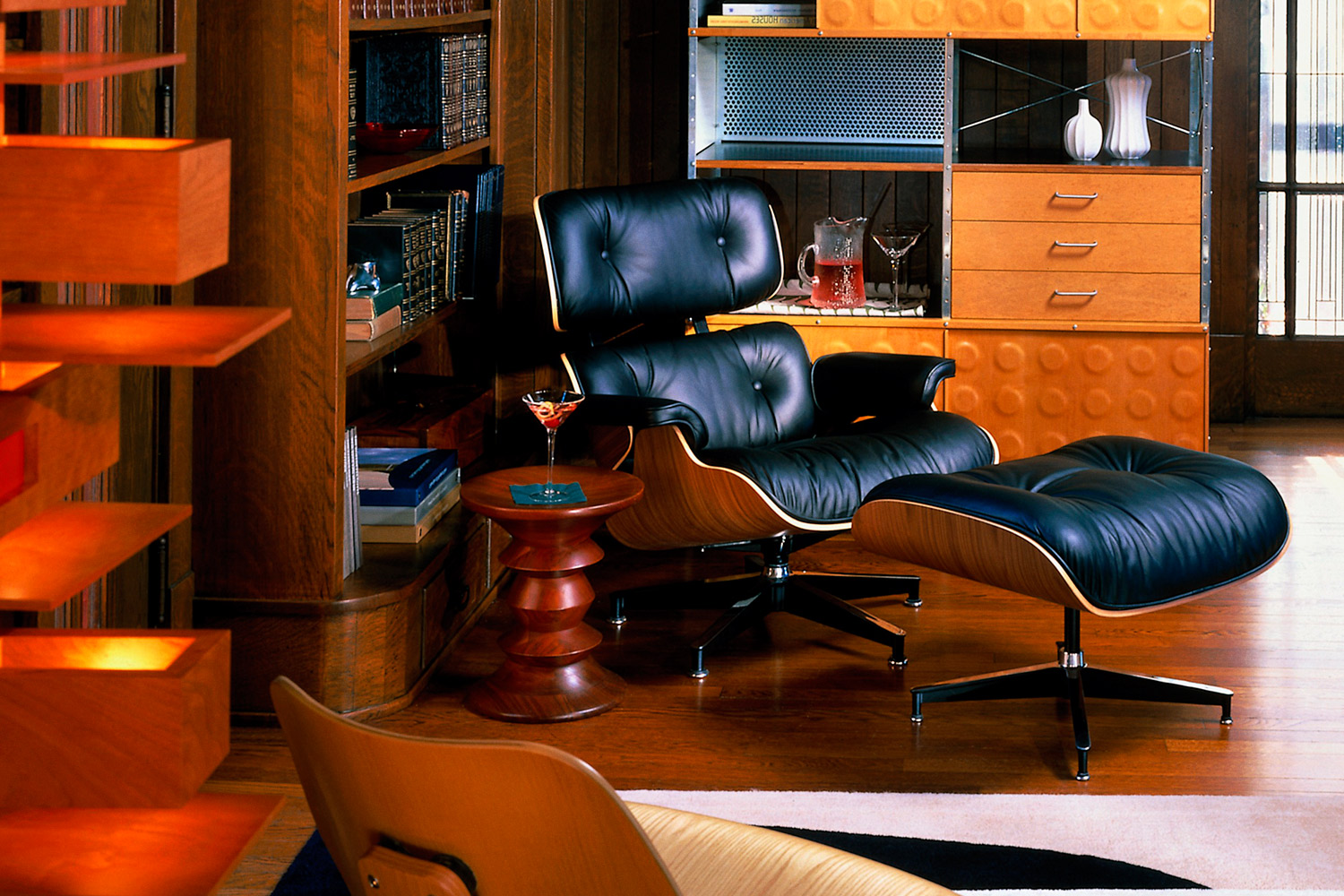
Designing the Eames Lounge Chair and Ottoman
The Eames Lounge Chair came about in 1956 from a desire to create something with the "warm, receptive look of a well-used first baseman's mitt." Charles wanted a chair that felt like it had already been lived in, inviting and personal, not stiff or formal.
The chair was the culmination of years of work with molded plywood technology, pairing it for the first time with soft leather cushions and a cast aluminum base. It was unveiled on the Arlene Francis Home Show on NBC, one of the first pieces of furniture ever launched on television.
In continuous production since 1956, the Eames Lounge Chair is manufactured today by Herman Miller in the United States and by Vitra in Europe and the Middle East. Both companies hold official licenses from the Eames family and produce the chair to the same specifications. A chair labeled Vitra is not a fake, it is simply the European version of the same authentic product.
Charles Eames died in 1978. Ray Eames died ten years later, on the exact same date, August 21, 1988. Their work remains in production, in museums, and in living rooms around the world.
Learn More About Your Eames Lounge Chair
Interested in going deeper? Here are the most useful guides on this site:


The best way to know if the lounge chair you are looking at is a real Eames Lounge Chair or a reproduction is to study the real thing. Just like with money, you look at the real thing long enough and you will know if something is off. The reproduction market has grown significantly over the years, and today there are dozens of manufacturers producing increasingly convincing knockoffs, making it more important than ever to know what separates the real thing from a fake. Here are the key things to look for.